Explore our research peptide guides covering peptide science, laboratory research, testing methods, quality standards, and other essential topics to help you better understand research peptides.
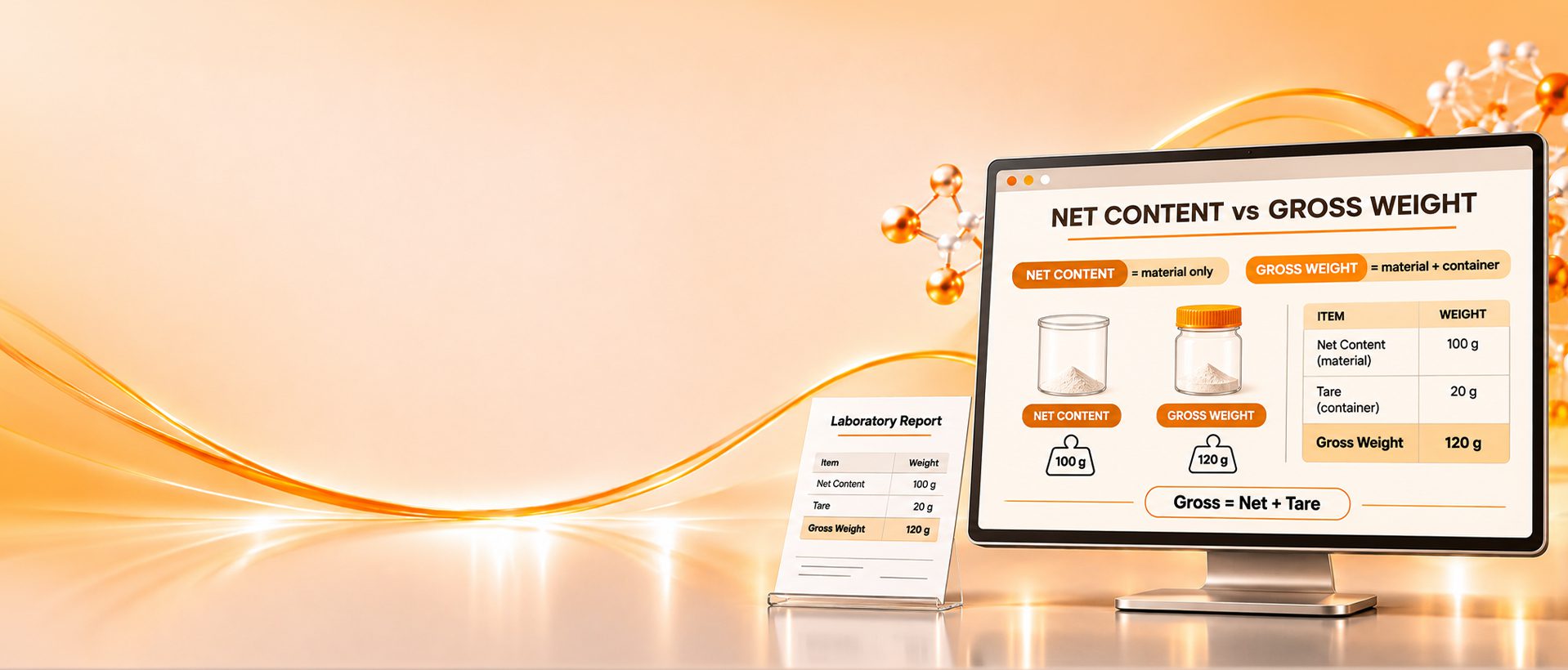
A vial on a laboratory bench can carry two very different numbers: the weight on the scale and the amount of material actually inside. Confusing them leads to wrong concentrations, failed comparisons, and records that do not match the label. Packaging, moisture, and residual salts all sit between the balance reading and the usable sample. In this guide, we explain net weight vs gross weight: what each term means, how to calculate one from the other, and why it matters for laboratory documentation.
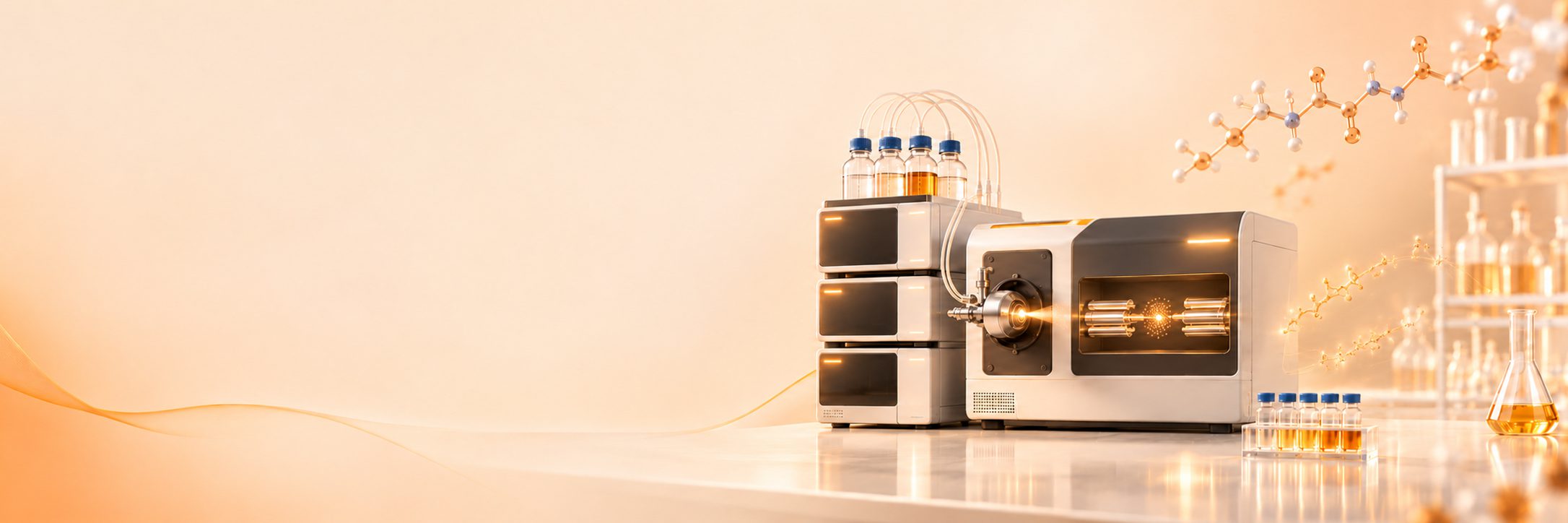
Every peptide has a fingerprint, and one of the clearest parts of it is its mass. A single measurement can tell a researcher whether a vial contains the molecule on its label or something that only looks similar. That is why mass spectrometry appears on almost every serious analytical report. In this guide, we explain mass spectrometry from the ground up: how it measures molecules, how to read its output, and how molecular mass supports peptide identity.
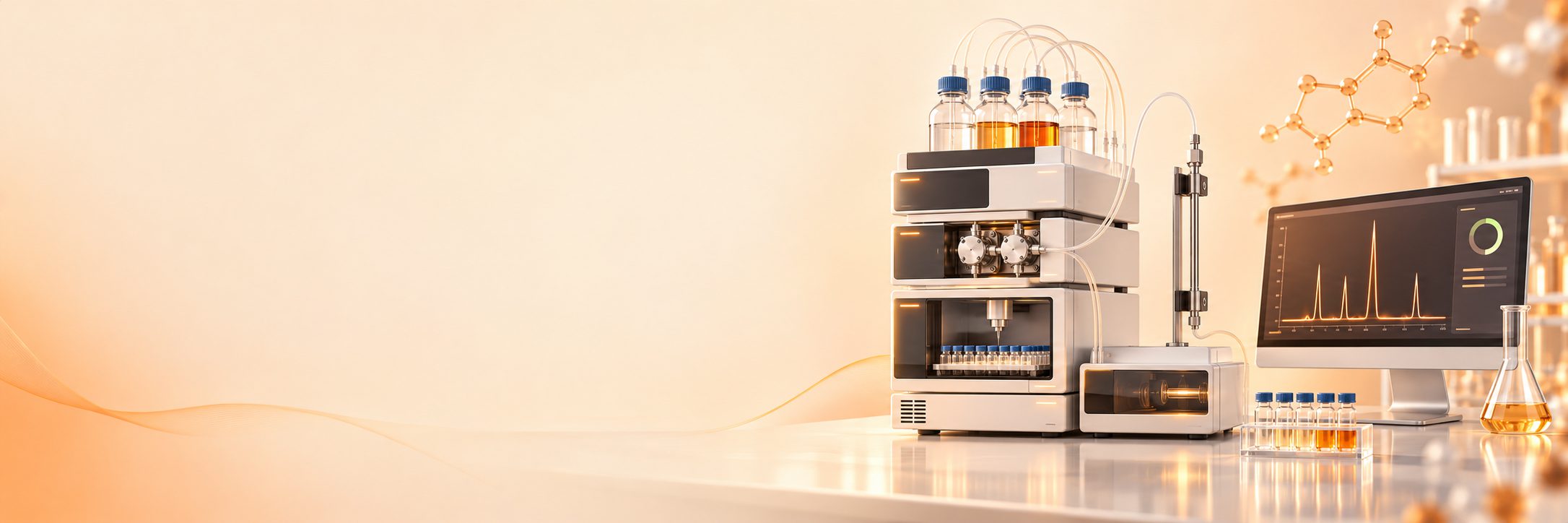
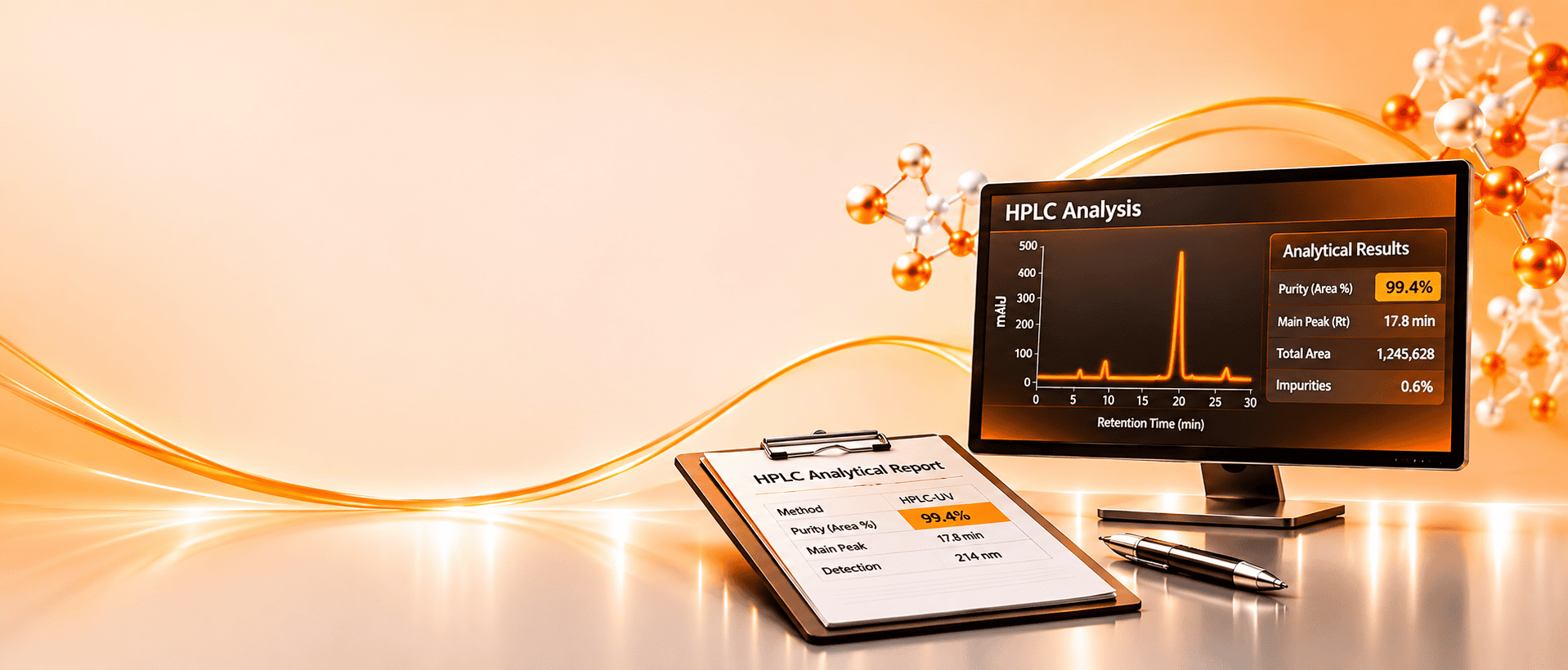
Behind almost every purity claim on a laboratory report sits a chromatogram. HPLC is one of the most widely used techniques for checking what is in a sample, yet its results can look like a wall of peaks to anyone who has never run one. Understanding how the method works turns those peaks into evidence you can judge for yourself. In this guide, we offer HPLC explained in plain language, from the instrument and the separation to the chromatogram and its limits.
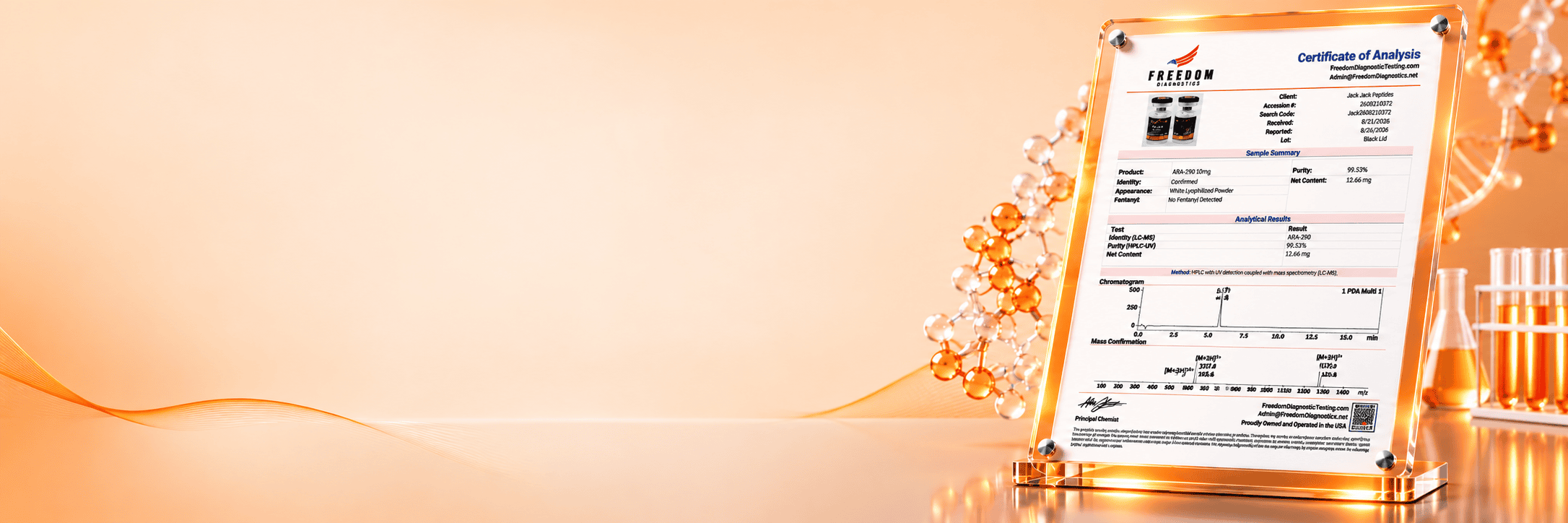
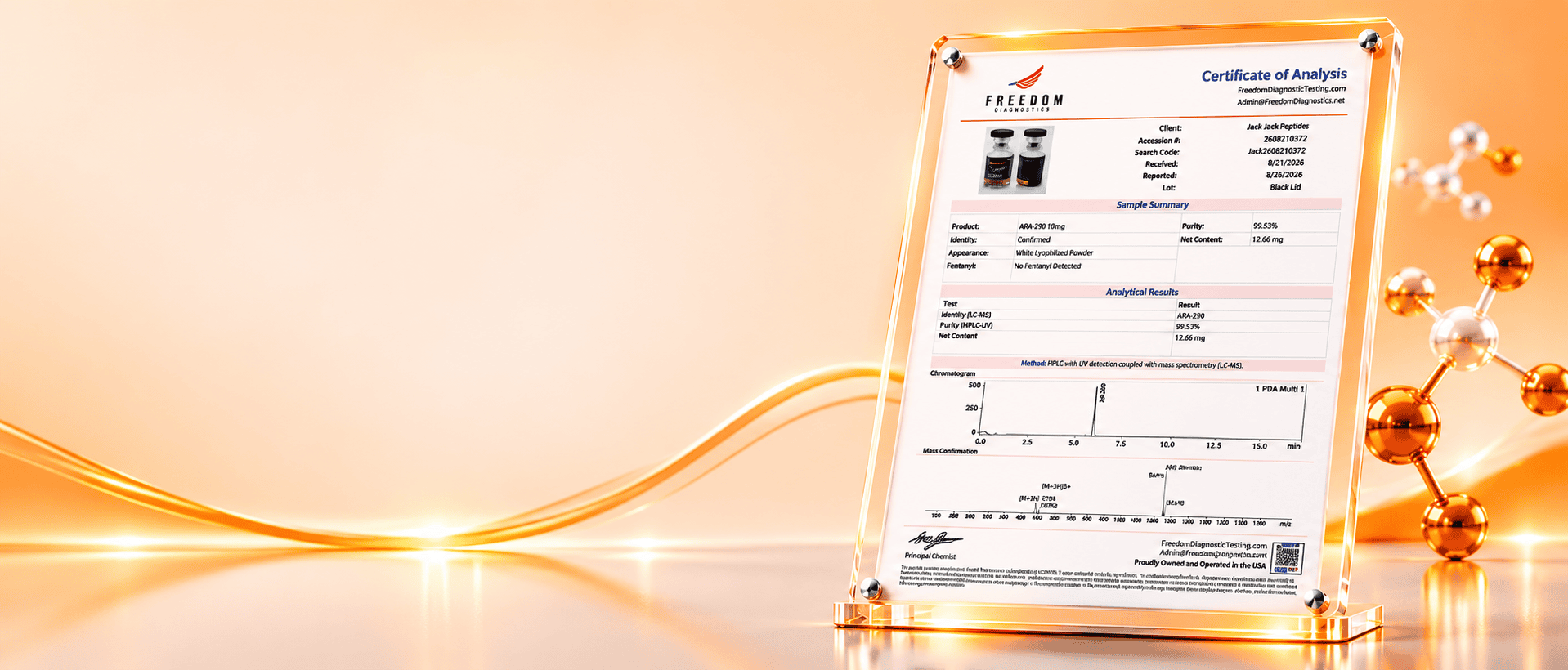
Learning how to verify a peptide CoAs takes the guesswork out of sourcing. A certificate is only useful if it is genuine, belongs to your batch, and shows results that hold together.
Every vial in your freezer has a story, and the peptide batch number is how you read it. That short code ties a vial to the production run that made it, the tests that checked it, and the records that describe it.
Amino acids are the small organic molecules that link together to build proteins. Whether you are a student, a lab enthusiast, or simply curious, they are the first step into molecular biology.
Understanding the BPC 157 peptide starts with separating experimental findings from proven medical outcomes. For laboratory researchers, its value lies in investigating biological processes under controlled conditions.
Products are sold exclusively to qualified researchers and licensed
laboratories. They are not drugs, food or cosmetics, and are not for
human or veterinary use. Create your researcher account once; we will
remember you on this device.